2.1.1. Framework in a nutshell
Works in research always want fast verification for some experimental ideas. Nevertheless, those ideas are usually too prototypical to be implemented in practice. This framework can be deemed as a language intersection between researcher and engineer: for researchers, it affords abundant enough utilities assisting building their processing and algorithm flow, while for engineers, it is standardized wrapper for algorithm implementation. As showed in Figure 2.1, it contributes to accelerate forming the practicable data processing flow, from the scientific prototype to engineering practice.
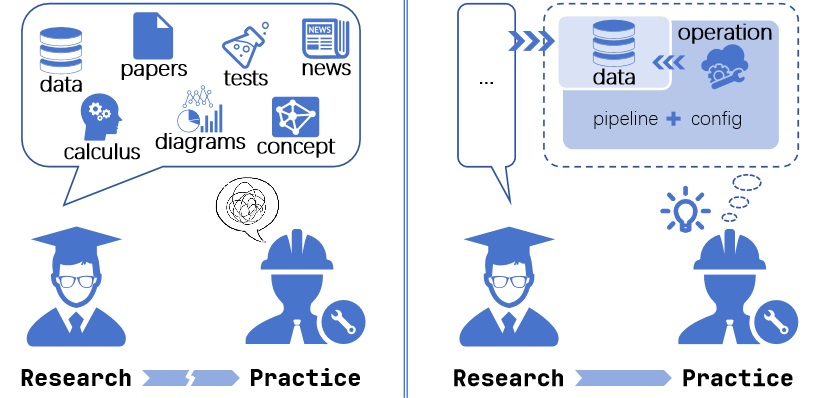
Figure 2.1 the bridge between research and practice
2.1.1.1. Featured syntax
Framework is featured for relatively unambiguous parameterization design on data processing. Furthermore, type hint and check, lambda calculus is enhanced in this system in order to fast implement customized computing steps.
2.1.1.1.1. Arguments predefine and type system
Parameter passing in Python includes positional arguments, optional arguments with default values, var-positional and var-keyword arguments where var means the variable length. As the illustration in Code 4.1, those passing mechanisms can be equivalently replaced by var-keyword exclusively. The wrapping function, is the main body of a pipeline in the Figure 2.1, while the var-keyword instance, can be deemed as the corresponding config to change the operational behavior of that pipe.
Pre-definition of default values and type check of argument can refer the example implementation in Code 3.6. Activating the entry or return type checking controlling can see the Code 3.4.
Design language of function here is mapping: data will be calculated from a certain form to the another. This framework separates executing body of function, parameters, and type checking system, for presenting a clear feeling on this mapping logic.
2.1.1.1.2. Function based scripting
In coding practice, a junior implementor might extend lots of branches to satisfy different constraint conditions. This habit will make the code block difficult to be maintained in the future. Following example shows a pseudo code with a mass of that indented branches for numeric calculating, type conversion, output control:
res = ...

if cond1:
    res = res + 2

if cond2:
    res = int(res)
elif cond3:
    res = float(res)
else:
    res = str(res)

if cond4:
    print(f'Type of current result is {type(res)}.')
Fortunately, applying ternary expression in Python can considerably simplify Code 2.1, using non-indentation style as:
res = res + 2 if cond1 else res
res = int(res) if cond2 else float(res) if cond3 else str(res)
_ = print(f'Type of current result is {type(res)}.') if cond4 else ...
The magic of non-indentation style is not only compacting code, if use the operator := to replace the assigning
operator =, each line in Code 2.2 will be a hashable object, which can be
included into a mutable object (e.g. list). Therefore, equivalent script on basis of lambda calculus is realizable
as:
f = (lambda x, cond1, cond2, cond3, cond4: [res := x + 2 if cond1 else x,
                                            res := int(res) if cond2 else float(res) if cond3 else str(res),
                                            _ := print(f'Type of current result is {type(res)}.') if cond4 else ...,
                                            res][-1])
The lambda calculus using F is the practice of var-keyword only function superpositioned
with non-indentation style. This programming paradigm is preferred for designing customized processing flow for tasks.
2.1.1.2. Unit of data processing
The purpose of class Unit using as data processing unit, is four-fold.
2.1.1.2.1. Packaging units
Code styles of plain Python script may vary individually, especially in scientific computation where test and trials are usually exists. For most researches, people spend amount time, on code construction for data preprocessing. Therefore, a well-organized form of code should make the previous works (related code implementation) be of high reusability, then time saving.
Following code shows a workflow for cropping, normalization, and edge sharpening sequentially for 3D images:
 from info.me import tensorn as tsn

 container = []
 for image in images:  # ndarray each case
     res = tsn.cropper(data=image, crop_range=[(.25, .25, .25), (.75, .75, .75)])
     res = tsn.normalization(data=res)
     res = tsn.prewitt_sharpen(data=res, sharp_alpha=0.9)
     container.append(res)
However, plain scripting in that processing flow in for loop is unstructured. For more compact organization via
informatics pipeline, it can be implemented as:
 from info.me import Unit
 from info.me import tensorn as tsn

 processing = Unit(mappings=[tsn.cropper, tsn.normalization, tsn.prewitt_sharpen],
                   crop_range=[(.25, .25, .25), (.75, .75, .75)], sharp_alpha=0.9)
 container = [processing(data=image) for image in images]  # ndarray each case
2.1.1.2.2. Function wrapper
It is also the wrapper for existed functions (or methods, scripts), after which can either be called as common function, or a specific step inside data processing pipeline:
 from numpy import ndarray
 from info.me import Unit, F

 def common_function(x: ndarray) -> ndarray:
     ...
     return processed_ndarray

 info_function = F(lambda **kw: common_function(kw.get('data')))  # function wrapper
 info_function_u = Unit(mappings=[info_function])  # unit wrapper

 info_function(data=image)  # either can be called as common function
 info_function_u(data=image)
 p = Unit(mappings=[..., info_function_u, ...])  # or reused in other pipelines
Informatics function is of the form with var-keyword arguments only, which can theoretically wrap any callable object in Python.
2.1.1.2.3. Integrate implemented unit or pipeline
If there’s already an informatics function function or unit implemented by someone, it is also handy to integrate that works into your personal task:
 from implemented_module import data_load_function, data_export_unit  # implemented by others
 from info.me import Unit

 predictor = Unit(mappings=[...])
 task_pipeline = Unit(mappings=[data_load_function, predictor, data_export_unit])

 for image in images:
     task_pipeline(data=image)
Therefore the big significance of the framework is, data can flow seamlessly among functions, in spite of varying individuals or teams, meanwhile each team can be more focused on the function(s) they are building up.
2.1.1.2.4. Pipe style code
With unit instances, informatics support pipe coding style, whose form is even as readily comprehensible as plain description. For instance, image processing steps from cropping, de-noising, resampling, then using two different method to make augmentation, compare their results, and finally save the compared result can be implemented as:
from info.me import Unit, F, archive
from info.me import tensorn as tsn

crop, denoise, resample = [Unit(mappings=_) for _ in [tsn.cropper, tsn.gaussian_filter, tsn.resize]]
prewitt, canny = [Unit(mappings=_) for _ in [tsn.prewitt_filter, tsn.canny_filter]]
compare, save = Unit(mappings=[F(lambda **kw: ...)]), Unit(mappings=[archive])

p = crop >> denoise >> resample >> (prewitt | canny) >> compare >> save  # pipe coding style
The operator >> intuitively prompt the data processing units, of before and after steps, while operator
| connects the paralleled processing units. When it involved more steps, factors that can affect final result
will increase exponentially. Trial on all possible options using manual configuration sometimes intelligible, but
always make the result mess. However, with this, data processing can be of ease for disassembly or integrating, just
like building lego.
- Authors:
Chen Zhang
- Version:
0.0.5
- Created on:
Feb 8, 2024